Partnering with people to build magnificent workplaces. The most complicated work I know, and the work I love the most.
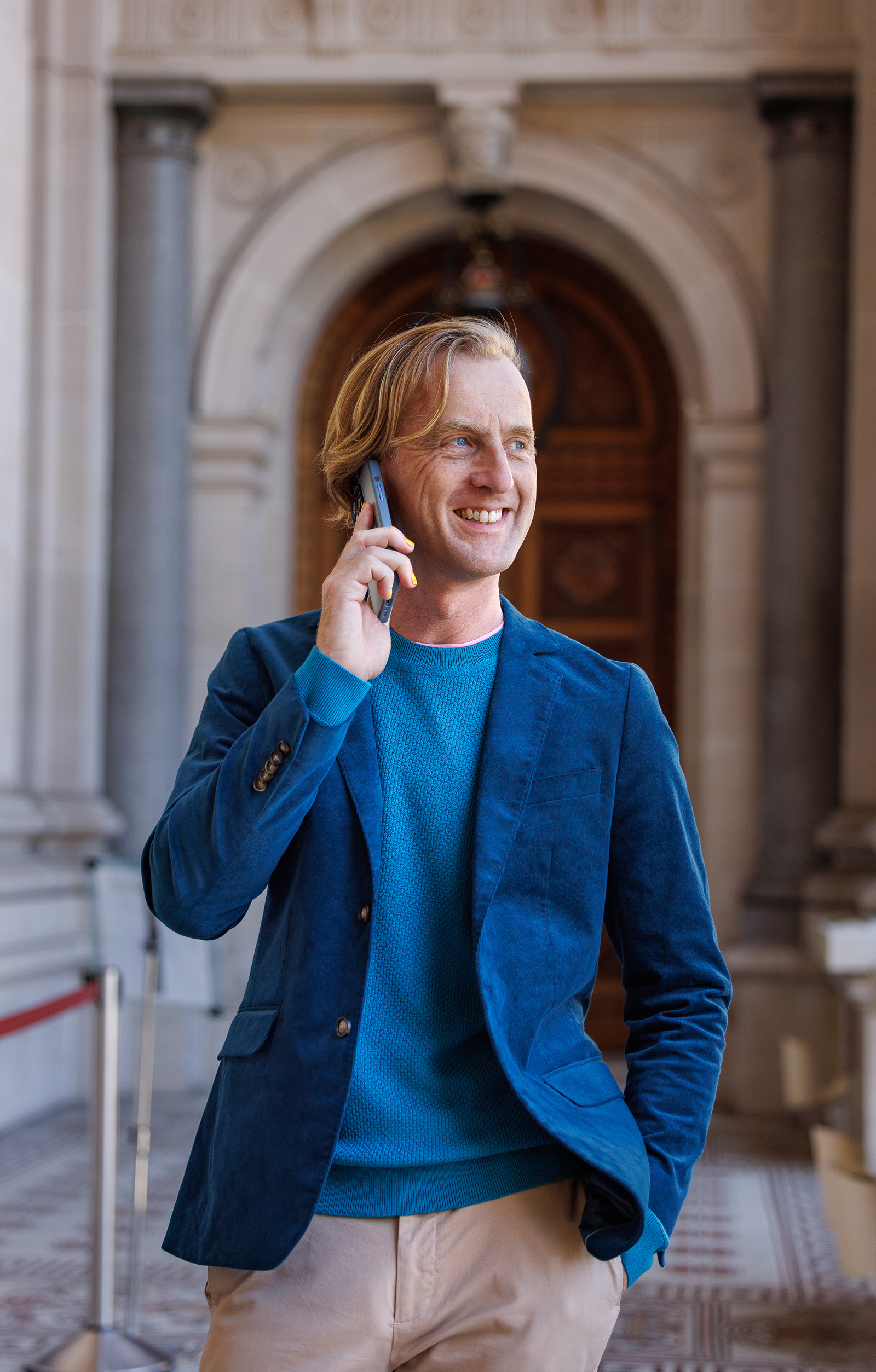
I'm Dr Brad Hodge, behavioural scientist, keynote speaker, facilitator, and author whose work is grounded in evolutionary psychology and behaviour change. I hold a doctorate in psychology, and I've spent the better part of my career doing one thing: working out why humans do what they do, and what to do about it.
The central argument is simple, even if the science isn't. Human behaviour becomes legible, almost predictable, once you understand what we're actually wired for. Strip back the org charts, the KPIs, and the leadership frameworks, and what you find underneath is an ancient creature with ancient needs, doing its best in a very modern world.
I work with leaders and organisations across sectors, not because something is broken, but because they want to build something genuinely worth building. My work interrupts comfortable assumptions, surfaces the questions most people are carefully avoiding, and then helps design the conditions for something better.
My background is deliberately broad. I've worked in rural health innovation, NFP governance, leadership development, and sleep research. I've led cycling expeditions, curated art exhibitions, and made genuinely stupid things with young people who needed someone to take them seriously.
I didn't go to university until my late thirties. My doctoral thesis was titled Getting students to work harder without making them hate you, which tells you most of what you need to know about how I think. Rigorous but human. Evidence-based but irreverent.
Across all of it I kept finding the same thing: humans are remarkably consistent once you understand what's driving them. That's the idea everything else is built on.
I am not a consultant who arrives with a pre-packaged answer. I am a thinking partner, a provocateur, and occasionally the person who says the thing nobody else in the room was willing to say. If nothing changes after I leave the room, I haven't done my job.
PhD
Doctorate in psychology
20+
Years working with leaders and organisations
2
Books: More and Humaning
Why I do this
The lesson I picked up there, without anyone needing to say it, was that your worth is measured in effort. You prove yourself in hours, by doing it the hard way, by being visibly knackered at the end of it. I carried that into every job I had afterwards.
Then I spent a career as a behavioural scientist studying why capable people do what they do. Mostly inside universities, but also across health services, not-for-profits, government, and businesses that look nothing like any of them. And I watched the same thing happen in room after room. Smart, committed people who, when the work got difficult, reached for harder rather than different. They would nod at the plan, agree with every word of it, then walk back to their desks and do exactly what they had always done.
It took me an embarrassingly long time to notice I was describing myself.
That is the gap I work in now: the space between what an organisation has to achieve and what its people actually experience while trying to achieve it. Most leaders are fluent in one and guessing at the other. I am not going to tell you how to lead your people, because I have not led yours and it would be presumptuous to pretend otherwise. What I can do is ask the questions that make the real problem visible, and then help you do something about it in the room rather than in a report.
There are two books coming out of it. One is about what this looks like for a person, one about what it looks like at work. The same question, from either end of the boardroom table.
I have not climbed your mountain, and I am not going to pretend I have. My job is to stand at the bottom and ask whether you have ever actually been in there. It is a better question than asking whether everyone is working hard enough, and I have yet to see that one help anybody.
Work with Brad
Three talks, one argument: the conditions people work in decide more about performance than the people do.
Working sessions that build capability using your team's real work as the material, so people leave with decisions rather than notes.
Two days away with the leadership group that owns the problem, where the work actually moves and the skills to run it are built on the way through.
Thinking partnership for the individual leader, and team coaching for the leadership group, so the shift travels instead of stalling with one person.
Most engagements begin with a conversation. Get in touch and we'll work out whether there's a fit.
Only Human
The diagnostic is the fastest way to find out. It is free, it takes about ten minutes, and it shows you the conditions you are creating for the people around you. Take the diagnostic →
Or leave your details for a short piece of thinking, every so often, written for leaders who are curious about the humans they lead, including themselves.